 Fundlet

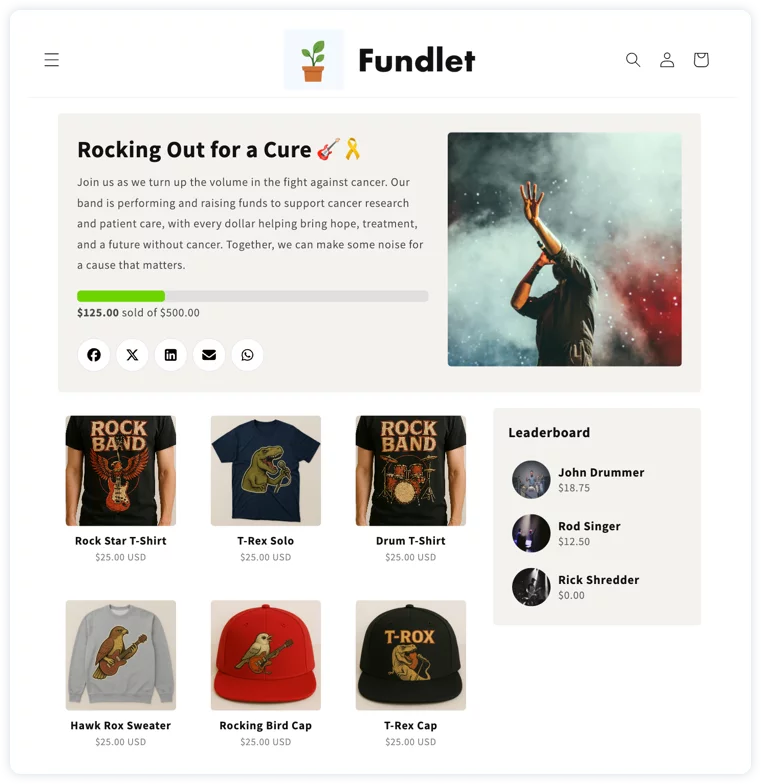
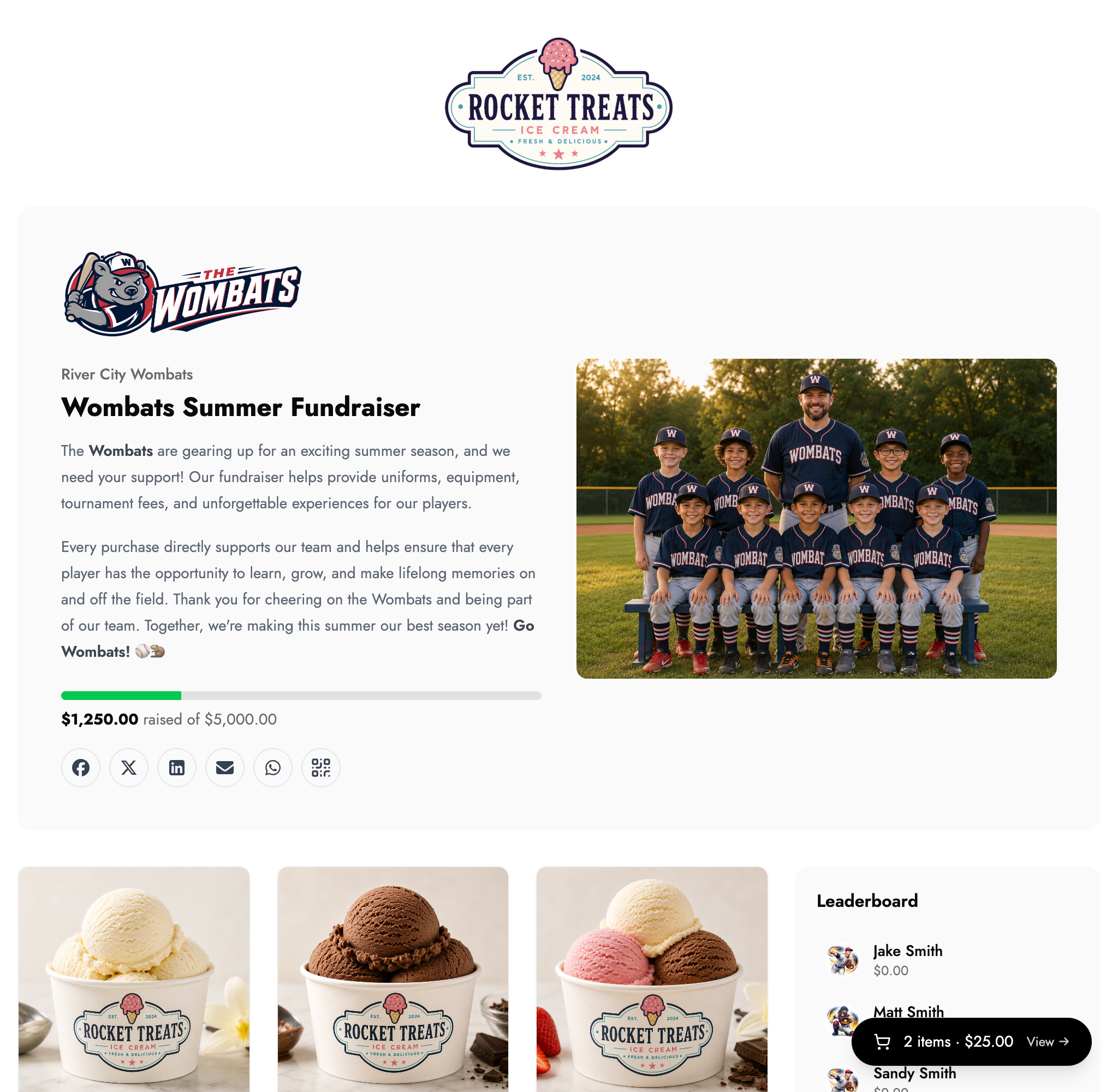
Short answer: A church can run a product fundraiser by selling a local shop's products through a Fundlet campaign page in the church's name. Members share links, supporters order online, and every sale is credited to the person who shared it — which lets a congregation raise money for a specific project without another appeal from the pulpit.
Churches are careful about asking, and rightly so. Members already give. A fundraiser that is simply a second collection creates fatigue; one where supporters receive something of real value from a local business does not, and it reaches well beyond the membership roll.
A specific project, not a general appeal
Campaigns work best when they name a thing: a van, a roof, a camp week, a kitchen remodel. Each campaign has its own page, goal, and visible progress, so the congregation watches a thermometer rise toward something concrete rather than contributing to an undifferentiated fund.
- One campaign per project, with its own goal
- Progress visible to the whole congregation
- Open and close dates you choose
- Multiple projects running at once
Every ministry, under one program
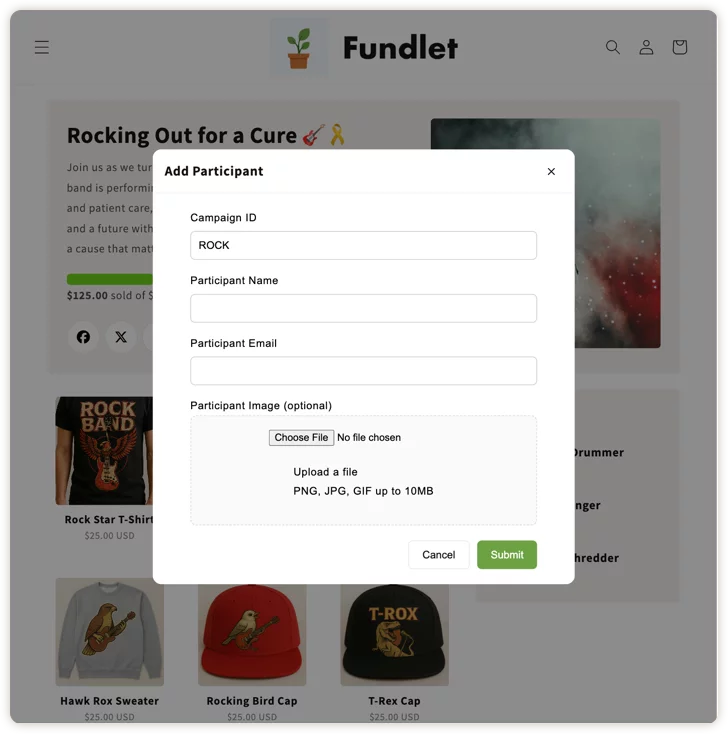
A church is many small organizations. The youth group, the women's ministry, the choir, and the preschool can each run a campaign with its own goal and roster, all through the same shop partnership, without competing for the same Sunday announcement or the same volunteer.
No cash in envelopes
Product drives traditionally mean cash and checks collected in the fellowship hall, held by a volunteer, and counted by two people in an office. Supporters here pay the shop's checkout directly, so the church does not take custody of funds in transit and the counting committee's workload does not change.
Records for the finance committee
Every order is recorded against its campaign and participant and can be exported. For a finance committee or board of trustees that must account for designated and restricted giving separately, keeping each project as its own campaign produces that separation automatically.
Members who have moved away
Congregations have long memories and wide diasporas: former members, grown children, families who relocated. None of them see a sign-up sheet in the narthex, but they will click a link in an email newsletter and support the church they grew up in — and the shop ships it to them.
Supporting a local business while you raise
Buying from a local bakery, roaster, or candle maker keeps money in the community and builds a relationship the church can return to year after year. For many congregations that is a meaningful part of the appeal, not a side effect.
Book a free 30-minute consultation to plan a project campaign, or send this page to a local shop in your community.
See also: Fundraising for Youth Groups, Fundraising for Mission Trips, and the full index of organization guides.
 Add to Square Store