 Fundlet

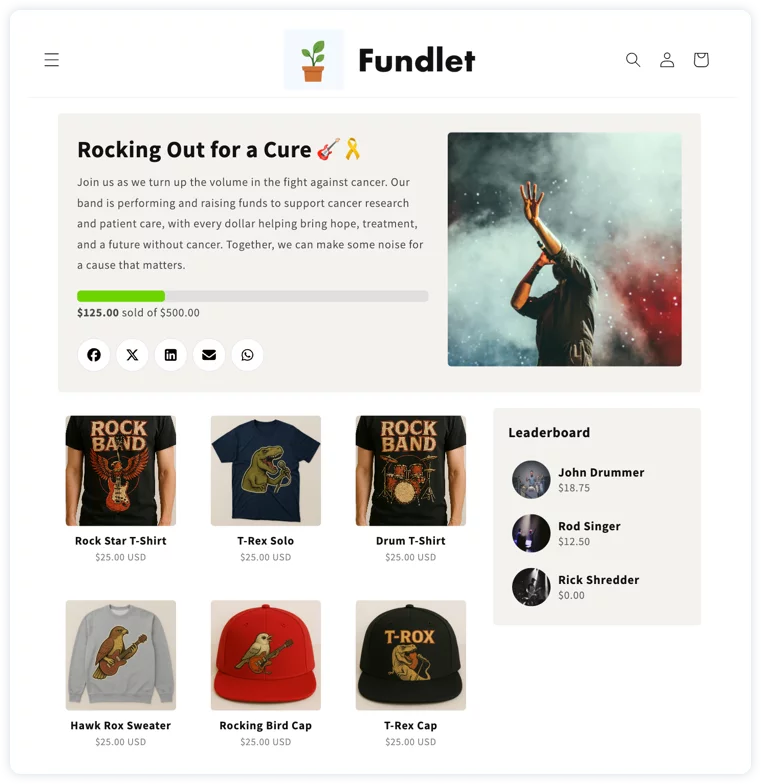
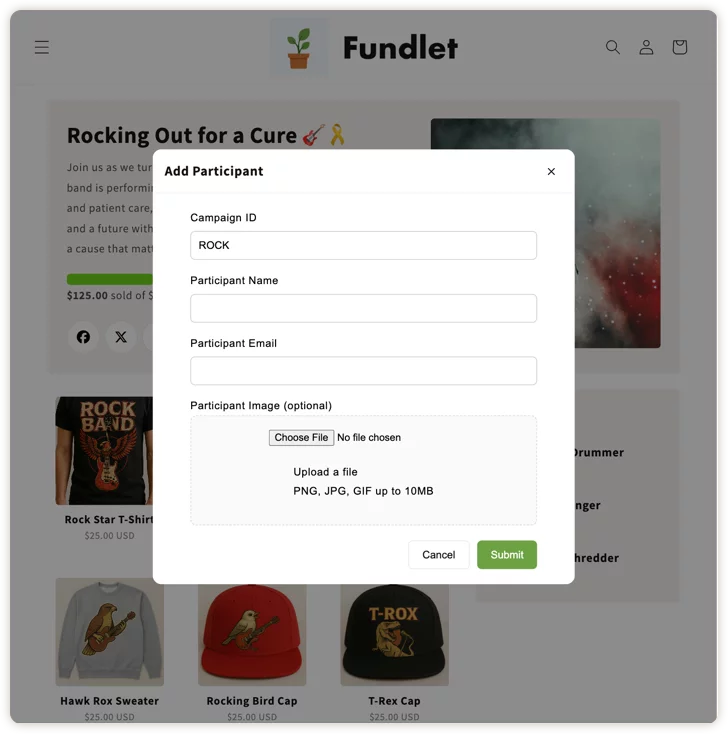

Short answer: A mission team can fundraise by selling a local shop's products through a Fundlet campaign page in the team's name. Each traveler gets a personal link, supporters order online, and every sale is credited to that traveler's total — which is exactly how mission trip accounting usually needs to work, since costs are assessed per person.
Mission trip funding is unlike most fundraising because the unit is the individual. Each traveler owes a specific amount by a specific date, support letters go out and some come back, and a coordinator tracks a dozen separate balances in a spreadsheet while chasing airfare deadlines.
Per-traveler balances, tracked automatically
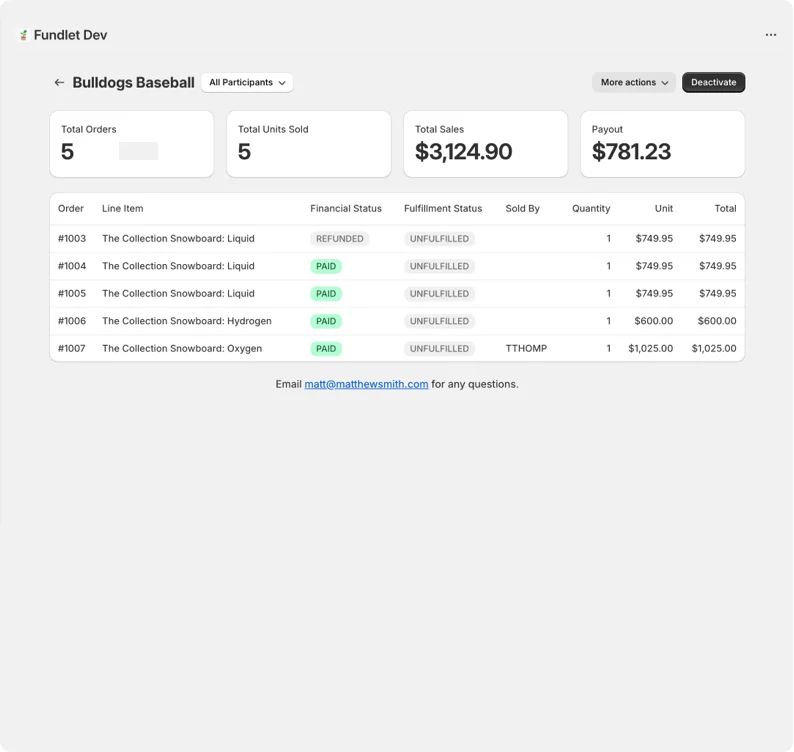
Every participant has a running total that updates as orders come in. The coordinator no longer maintains the spreadsheet — the dashboard is the spreadsheet, and each traveler can see their own progress toward their own cost without asking.
- One link per traveler
- Totals update at checkout, not at a meeting
- Group travelers by team or by trip
- Exportable records for the church or sending organization
An alternative to the support letter
Support letters work, but they are a donation ask aimed at a finite list, and many travelers are uncomfortable sending them. Selling a real product changes the conversation: a supporter gets something from a local shop at a normal price. Travelers who would never write a support letter will send a link.
Deposits, airfare, and staged deadlines
Trip costs arrive in stages — deposit, airfare, program fee, final balance. Running a campaign per stage, each closing before its deadline, keeps the funding aligned with the invoices instead of asking the sending church to carry the difference.
Teams that are not all local
Mission teams often draw from several congregations or from students scattered across campuses. Because the drive runs on links rather than on in-person collection, geography does not matter — travelers who live three hours apart participate identically.
No one carrying cash or checks
Supporters pay the shop's checkout. Nothing is deposited into a personal account, nothing is reimbursed, and the sending organization has a clean transaction record for designated trip funds — which matters when those funds are restricted.
Shortfalls, and the team fund
Some travelers raise more than their cost and some fall short. With per-participant totals in front of you, a team can see that picture early enough to act on it — redirecting surplus to a team fund or opening a short second campaign weeks before the final balance is due.
Book a free 30-minute consultation to plan a trip campaign, or send this page to a shop in your community.
See also: Fundraising for Churches, Fundraising for Youth Groups, and the full index of organization guides.
 Add to Square Store